Physics of Knowledge
Understanding knowledge as a physical phenomenon with measurable properties
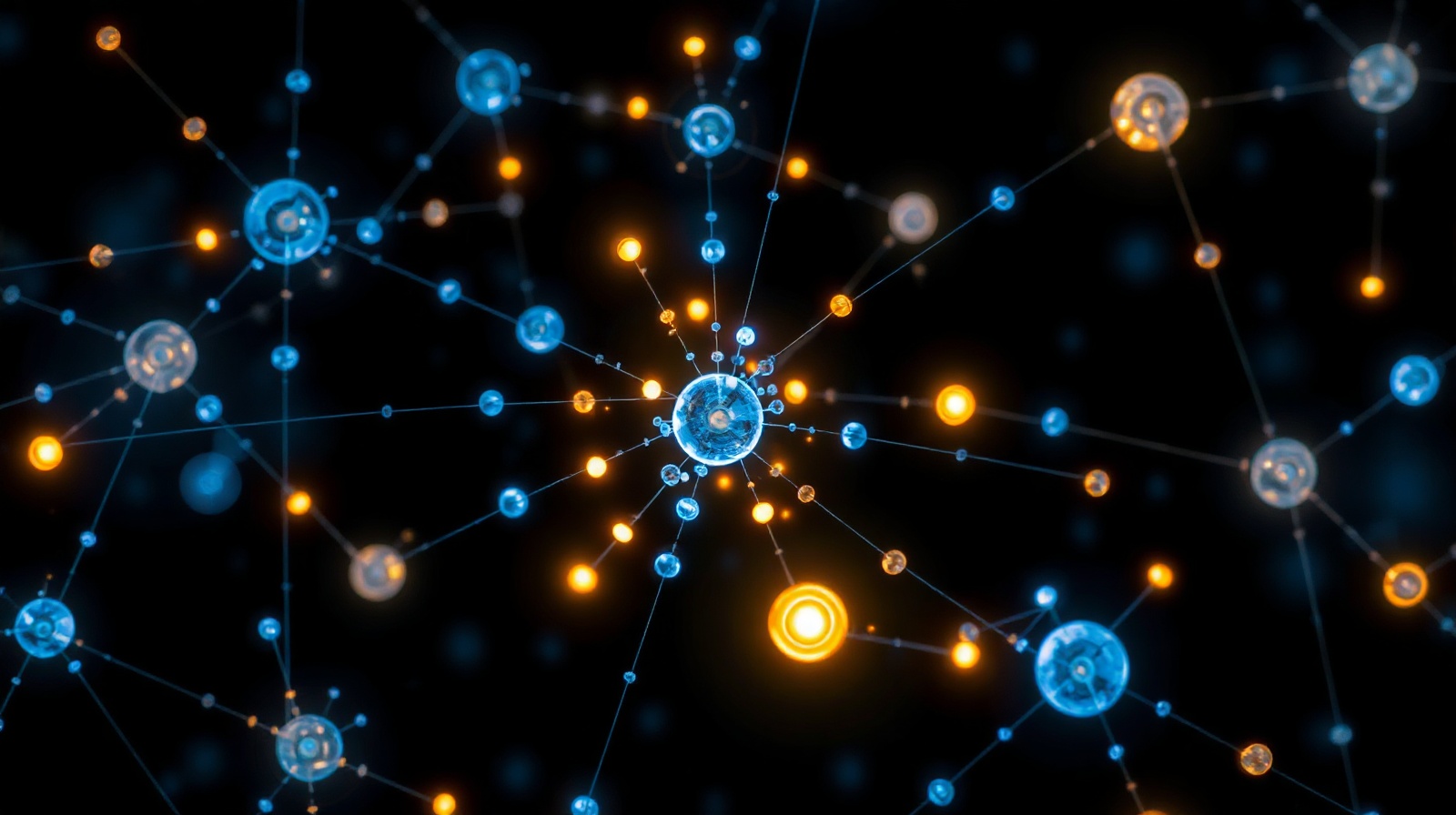
A New Framework
Rethinking the nature of knowledge itself
The Physics of Knowledge represents a fundamental reimagining of epistemology. Rather than treating knowledge as abstract information stored in minds or databases, we propose that knowledge has physical properties that can be measured, quantified, and understood through the lens of physical law.
Just as physics revealed that energy and matter are interchangeable, the Physics of Knowledge reveals that information and understanding are physical phenomena — they exist in the world, not just in our descriptions of it.
This framework emerges directly from the LEARN project's core insight: that the gap between predictive models and actual observations (the residual approximation) is not merely an error to be minimized, but a measurable physical quantity that drives the evolution of understanding.
Core Concepts
The foundational ideas of knowledge physics
Knowledge as Physical Phenomenon
Knowledge is not abstract information — it has measurable physical properties. It can be quantified, distributed across systems, and transformed through interaction with the environment.
Distributed Epistemology
Understanding emerges from the network of human consciousness, artificial intelligence, and physical sensors. No single node possesses complete knowledge; it exists in the connections between them.
Residual Approximation
The gap between predictive models and actual observations is not error — it is the fundamental driver of learning. This residual is the physical manifestation of incomplete knowledge.
Emergent Intelligence
Intelligence is not located in any single component but emerges from the dynamic interaction between observer, environment, and interpretive framework.
The Four Principles
Fundamental laws governing the physics of knowledge
Conservation of Knowledge
Knowledge cannot be created or destroyed, only transformed. What appears as new understanding is actually the reorganization of existing information into more coherent patterns.
Entropy of Understanding
Isolated knowledge tends toward fragmentation and disorder. Only through continuous observation and integration can coherent understanding be maintained.
Observation-Reality Coupling
The act of observation fundamentally alters both the observer and the observed. Knowledge is not a passive reflection of reality but an active participation in its construction.
Distributed Coherence
Complex systems achieve coherence not through centralized control but through the alignment of distributed elements. Intelligence emerges from this alignment.
Temporal Dynamics of Knowledge Reduction
The measurable signature of intelligence as process
Residual Approximation and Segmentation Events
The Physics of Knowledge quantifies intelligence through residual approximation — the gap between prediction and observation. But this static magnitude captures only half the story. The other half is the trajectory through which that gap is closed.
Discrete cognitive segmentation events are the measurable temporal signatures of this trajectory. They are momentary, automatic interruptions or commitment points where a system transitions from one processing state to another. Examples include:
- • Free-energy settling events in predictive-processing agents: the point where variational free energy is driven sufficiently low that the approximate posterior settles and evidence can be integrated
- • Working-memory consolidation events: periodic, non-causal reorganization of internal state representations where temporary activations are committed to longer-term storage
- • Latent state-transition signals: automatic resets that prevent contextual interference across successive inference episodes
These events are load-dependent: they occur with different timing and frequency depending on information-processing demand. In humans, the structural analogue is the blinking reflex: blink suppression during high attention protects information intake; blinks preferentially occur at processing boundaries after integration or uncertainty resolution.
The relationship between segmentation event dynamics (ΔB(t)) and information-processing demand (ΔI(t)) reveals the patterned structure of cognition itself. Intelligence is therefore observable in both the magnitude of residual reduction and in the load-sensitive temporal pattern of segmentation events.
Residual Magnitude
Quantifies the size of the gap between prediction and observation: R = |ŷ - y|
Answers: "How large is the approximation error?"
Segmentation Dynamics
Quantifies the temporal trajectory of gap closure relative to information demand: ΔB(t) / ΔI(t)
Answers: "How is the gap being closed in real time?"
Implications
What the physics of knowledge means for science and philosophy
Traditional View
Knowledge is abstract information
Understanding exists in individual minds
Observation is passive recording
Error is something to eliminate
Science describes reality from outside
Physics of Knowledge
Knowledge has physical properties
Understanding is distributed across systems
Observation actively constructs reality
Residual approximation drives learning
Science participates in reality's evolution
Connection to LEARN
How the physics of knowledge grounds the LEARN system
The LEARN system is not merely an application of the physics of knowledge — it is the experimental proof that these principles are real. By measuring residual approximation as a physical quantity, LEARN demonstrates that knowledge has measurable properties.
The distributed intelligence framework (human + AI + sensors) embodies the principle that understanding emerges from networks, not individuals. The autonomous observation cycle (Observe → Record → Analyze → Experiment → Learn) is the physical instantiation of knowledge evolution.
Every experiment conducted by LEARN, every measurement of residual error, every refinement of predictive models — these are not just technical operations. They are empirical investigations into the nature of knowledge itself.
Continue the Exploration
Discover how these principles manifest in the journey from division to vision.